2026 · Case study
← Back to workTesting a dream
Yokibug
- Role
- Designer + builder
- Timeline
- 2026, ongoing
- Focus
- Brand, product, commerce
- Stage
- Early exploration
Problem
Generating physical, analog artwork is expensive and laborious. The art-show model is still compelling, but expensive and cost prohibitive. The path to becoming a successful artist looks a lot like winning the lotto.
A return to patronage, what funded the Renaissance , seems the way to go. Yokibug is a bet on rebuilding that relationship for today.
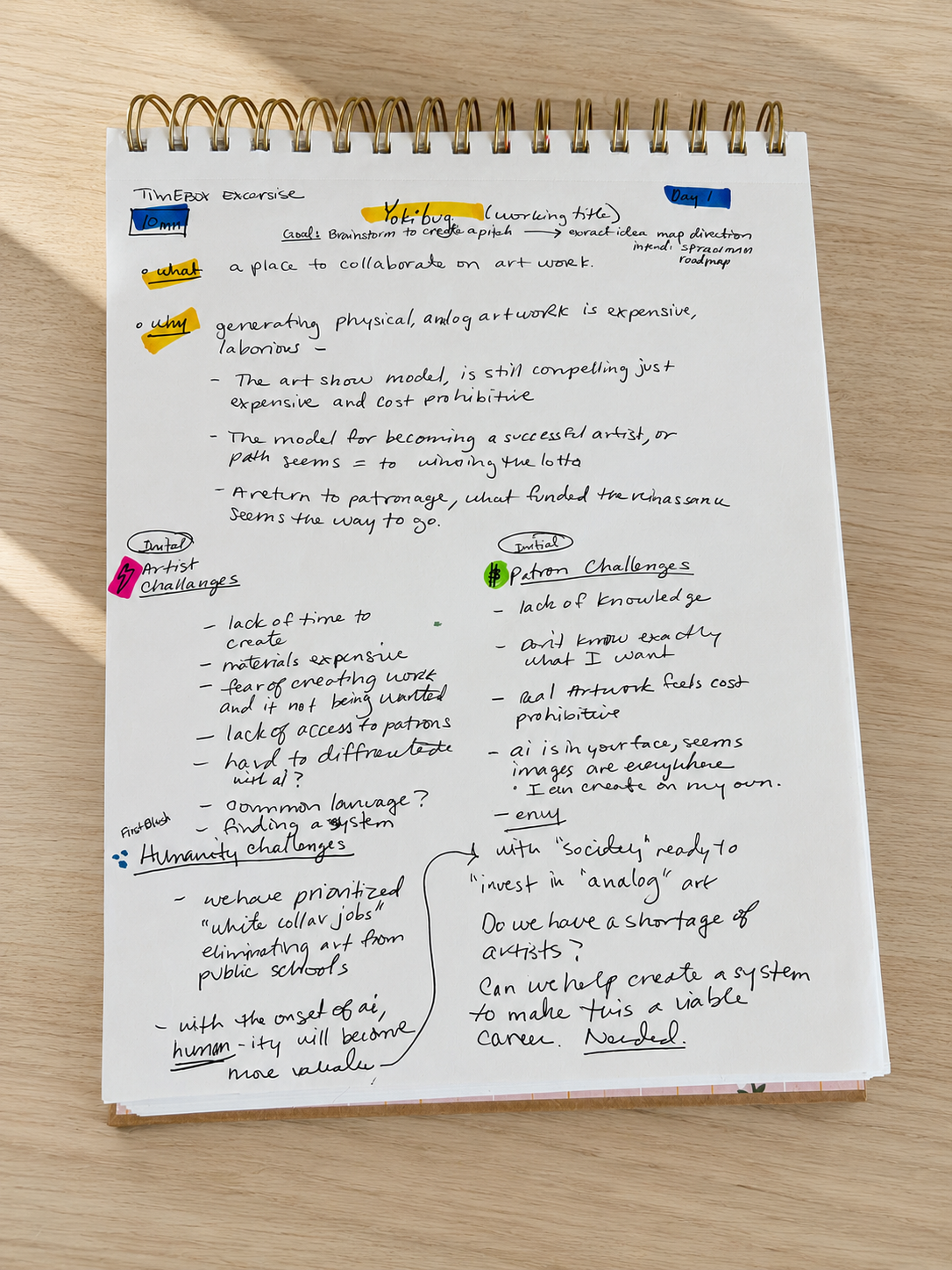
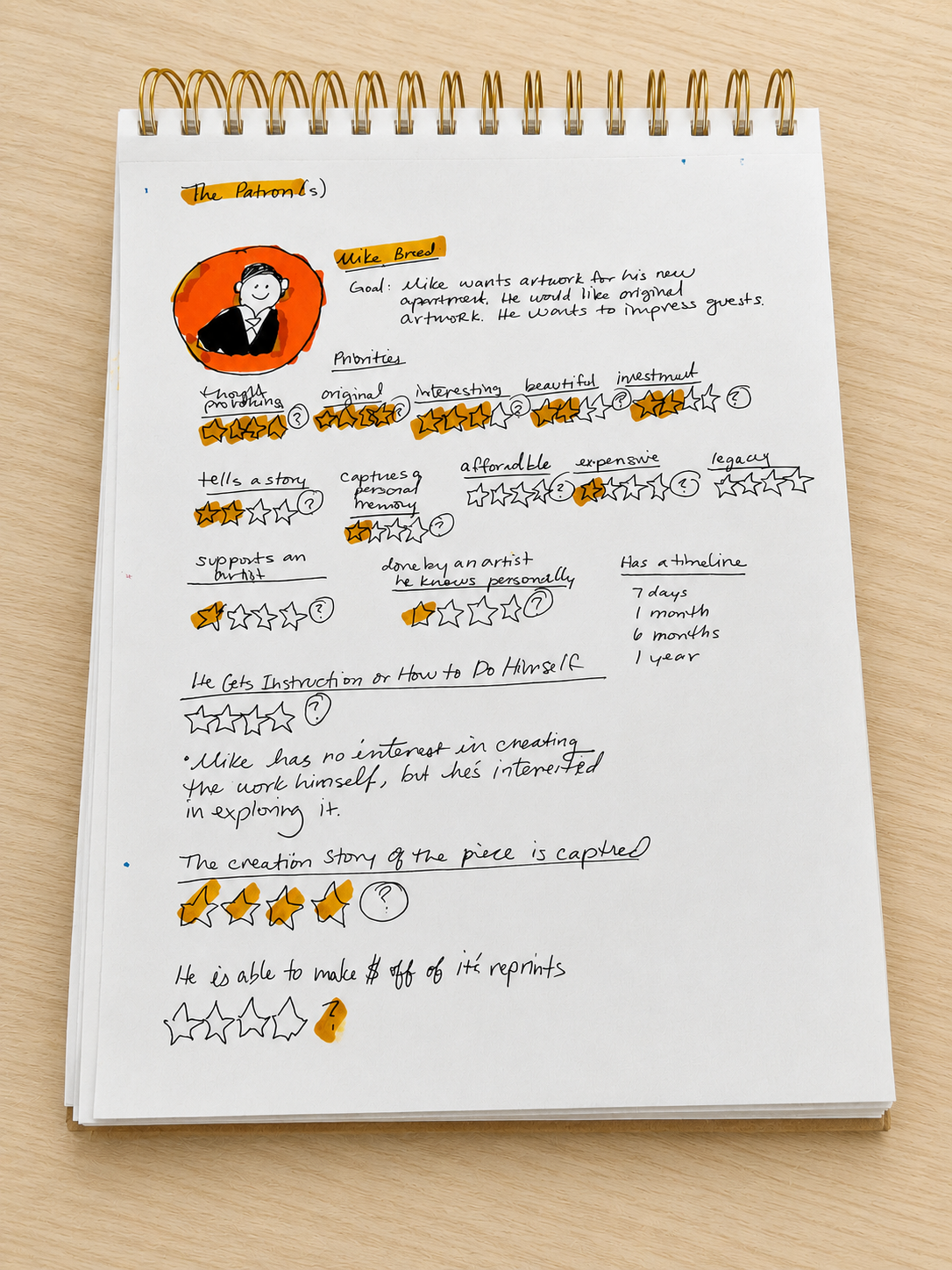
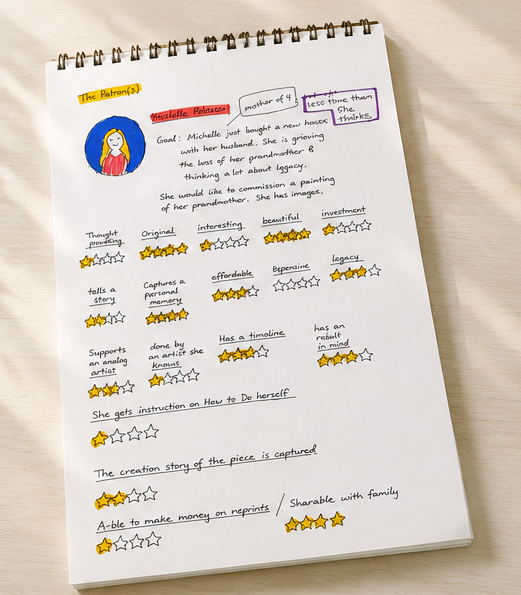
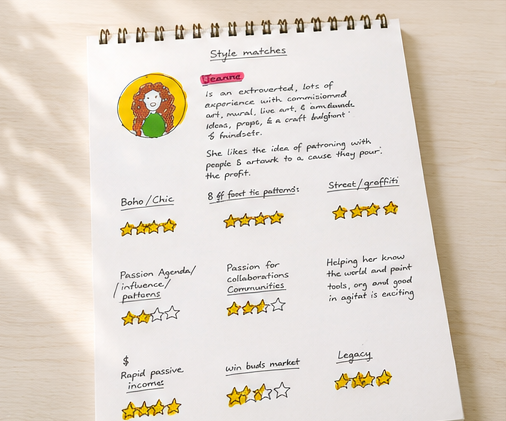
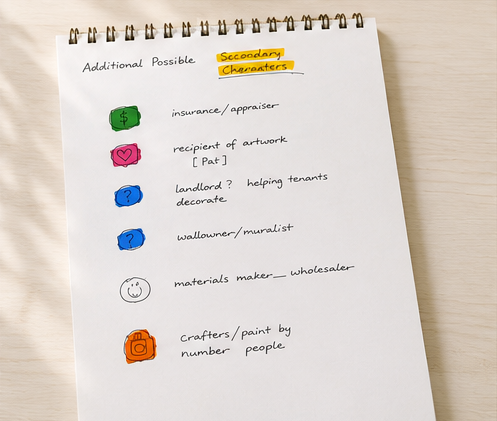
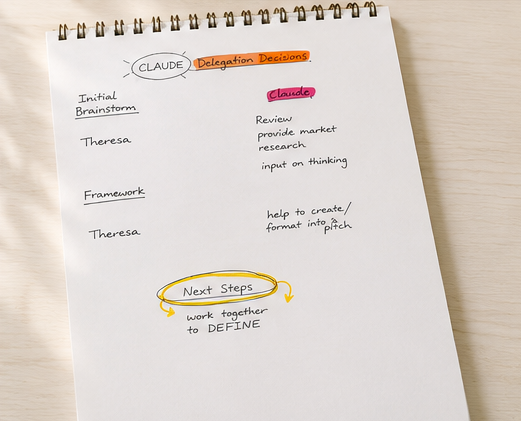
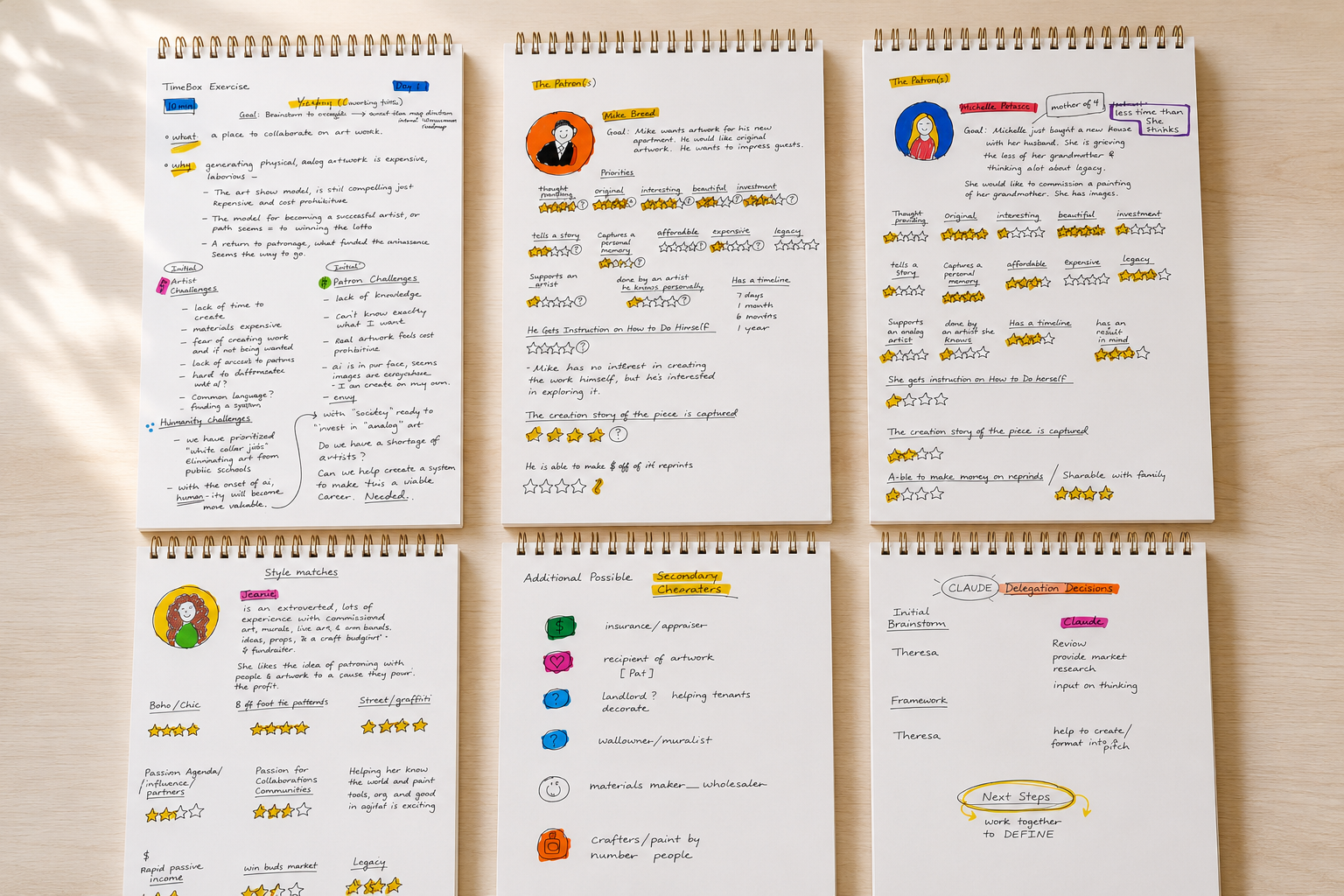
Flip through the notebook →
Challenge and Research
The exploration started as a TimeBox exercise, designed to get to a pitch deck in a day: an idea map, intended strawman, and rough roadmap, all pulled out in a single working session. The notebook pages above are the raw artifact.
Artist challenges. Lack of time to create. Materials are expensive. Fear of creating work and it not being wanted. Lack of access to patrons. Hard to differentiate with AI. Needing a common language, and a system to work inside of.
Patron challenges. Lack of knowledge. Not knowing exactly what they want. Real artwork feels cost prohibitive. AI is in your face, images are everywhere; "I can create on my own." Envy.
Humanity challenges. We've prioritized white-collar jobs and eliminated art from public schools. With the onset of AI, humanity itself becomes more valuable, and society seems ready to invest in analog art. Do we have a shortage of artists? Can we help create a system to make this a viable career? Needed.
Foundational case studies, raw commission data
Six real commissions from the artist's history, used as the source material for personas, pricing intuition, and the shape of the product.
- 01Commission
Joe Anzalone
Joe had worked with the artist before (graphic design at AMS) and observed her work. He'd bought a small condo in downtown San Diego and hated that it had no view, asked her to paint him something.
Interview covered style (masculine but pretty), paint (archival oil), size (measured against the wall), and placement (confirmed no direct sun, dark corner of the room). He declined a sketch. His quote: "I want it to feel like a comic book but make a good view." Payment pre-arranged at $500. He had it framed afterward, framing is a separate part of the business, possibly worth including. Extraction happened over wine, intimate setting.
- 02Commission
Ashley Brown
Wanted to commission something for her boyfriend, a favorite spot of his, painted onto a surfboard. Together they settled on a limited palette: greens and pinks. She was very happy with the result. (The relationship didn't last long after.) Ashley had come to the artist's art shows and painting lessons before commissioning.
- 03Commission
Amy Charnock
Saw an existing painting and wanted something similar for her husband. She supplied a photo of him underwater surfing. The artist painted his feet and hands on wood using wood stain, then sealed it with epoxy. Amy unveiled it in the studio before their date. He was surprised and thrilled. Payment (~20 years ago): ~$200. Amy had commissioned before and had attended a show.
- 04Commission
Trader Joe's
Commissioned 8 murals, painted on boards so they could be moved. Required finding local reference areas and painting scenes from the Escondido county fair.
- 05Commission
Matt and Jen
Wanted painting lessons at the artist's studio, wine and paint nights. As the teacher, she had to come up with subject matter that was appealing to a group.
- 06Commission
Asaf / iMonument
Asaf wanted to sell his business (Imatrix) and believed that bringing art to the property, specifically painted electrical utility boxes, would make the building more marketable. The artist proposed iMonument: portraits on the boxes paired with QR codes (novel at the time) that let viewers read about who each box was dedicated to, the "fathers and mothers of the internet." The one commission that started from a business/marketing problem rather than a personal or gift occasion, a different job-to-be-done than 01–05.
Synthesis
Hypothesis
We believe that making commissioning a painting feel easy, simple, and like an investment will make patrons more likely to commission a painting, if they can sign off on a sketch or agreed product brief (similar to landscape design).
We believe that by interviewing the client thoroughly and feeding them questions that evolve in real time based on their answers, we can steer them toward the right direction.
We believe that by making the client feel a bit of their own DNA is in the process, they are more likely to love the outcome.
Market Sizing (TAM / SAM / SOM)
TAM, anyone with a wall.
SAM, 10 people. Start with the artist herself as the sole practitioner. Once the process is tested and the system works, it can be licensed out to other artists ("let's use this").
SOM, not yet sized. Needs work.
The Business Case
Fill in: the opportunity in dollars and in impact, why this is worth building now, and what a healthy first year looks like (pricing, volume, and margin per commission).
Design Recommendations
YokiBug, Design System v1.1
Prepared for the YokiBug pitch deck
Takeaways & Next Steps
- Pitch
- Test Use Cases