2024 · Case study
← Back to workResident experience, moving
LOFT Moving
- Role
- Founding Designer
- Team
- Product, Engineering, Research
- Timeline
- Concept through multiple releases
- Tools
- Figma, FigJam
Problem
Moving into a new apartment is one of the most stressful moments in a resident's life. Leases, insurance, utilities, internet, first payments, and a dozen small tasks all land in the same two weeks, and each one lives in a different portal, PDF, or phone call.
Property teams felt it too. Front offices absorbed the questions the onboarding flow did not answer, and residents started their lease already behind.
Challenge and Research
The goal was a single move-in experience that could scale across thousands of properties without losing the personal, community-level feel residents expect from their new home.
Research included interviews with new residents, shadowing front-office teams during peak move-in weeks, and mapping the end-to-end journey from lease signing through the first month of residency.
Internal challenge. Mid-build, RealPage decided to acquire KeyReady. The move was shrouded in secrecy, and we were told to halt work with almost no context. Focus shifted to assessing KeyReady, their product, and their team, and figuring out how to integrate their system into our plan. At the same time, LOFT was rolling out across the org, so I was simultaneously folding new LOFT design elements into Moving as they landed. Designing the product, absorbing an acquisition, and adopting a new design system, all at once.
Synthesis
Three insights shaped the direction:
- Time to lease start is the real deadline. Every task should be anchored to it so residents can see what is due when.
- A checklist beats a portal. Residents want a short, ordered list of what is next, not a menu of everything the platform can do.
- A human is still the safety net. When something gets confusing, residents want a person, not another form.
Design Recommendations
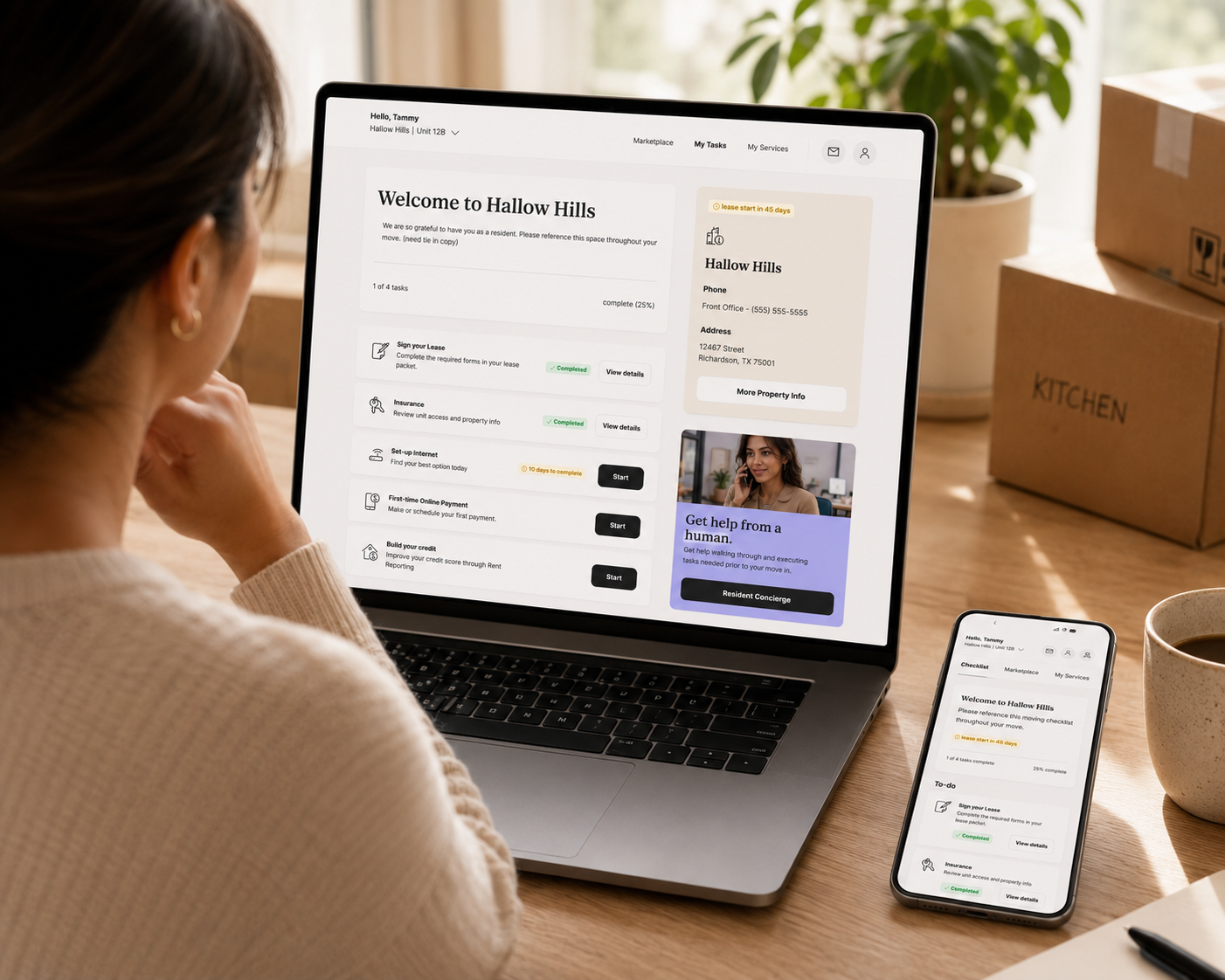
The product centered on a personalized welcome checklist tied to lease start, task cards with clear status and next actions, property-level context surfaced up front, and a Resident Concierge entry point for anything the flow could not resolve on its own.
The visual system leaned warm and calm on purpose. Moving is loud enough already; the interface should feel like the quiet part.
Takeaways & Next Steps
As the founding designer, the hardest and most valuable work was deciding what LOFT Moving would not do. There was constant friction between the product and the pull to turn it into an ad space. I tried to think of myself as a Costco buyer, curating the best products our future tenants would actually need for the season they were in.
The product shipped through multiple releases, the Moving team grew from a founding group into a full product org, and the checklist model became a pattern other resident experiences at RealPage borrowed from.
Measuring success. Moving was the flagship product in the LOFT launch. We partnered closely with Camden to make sure it worked for them, coordinating across multiple teams to land the release.